From Underground Heat to Civic Infrastructure
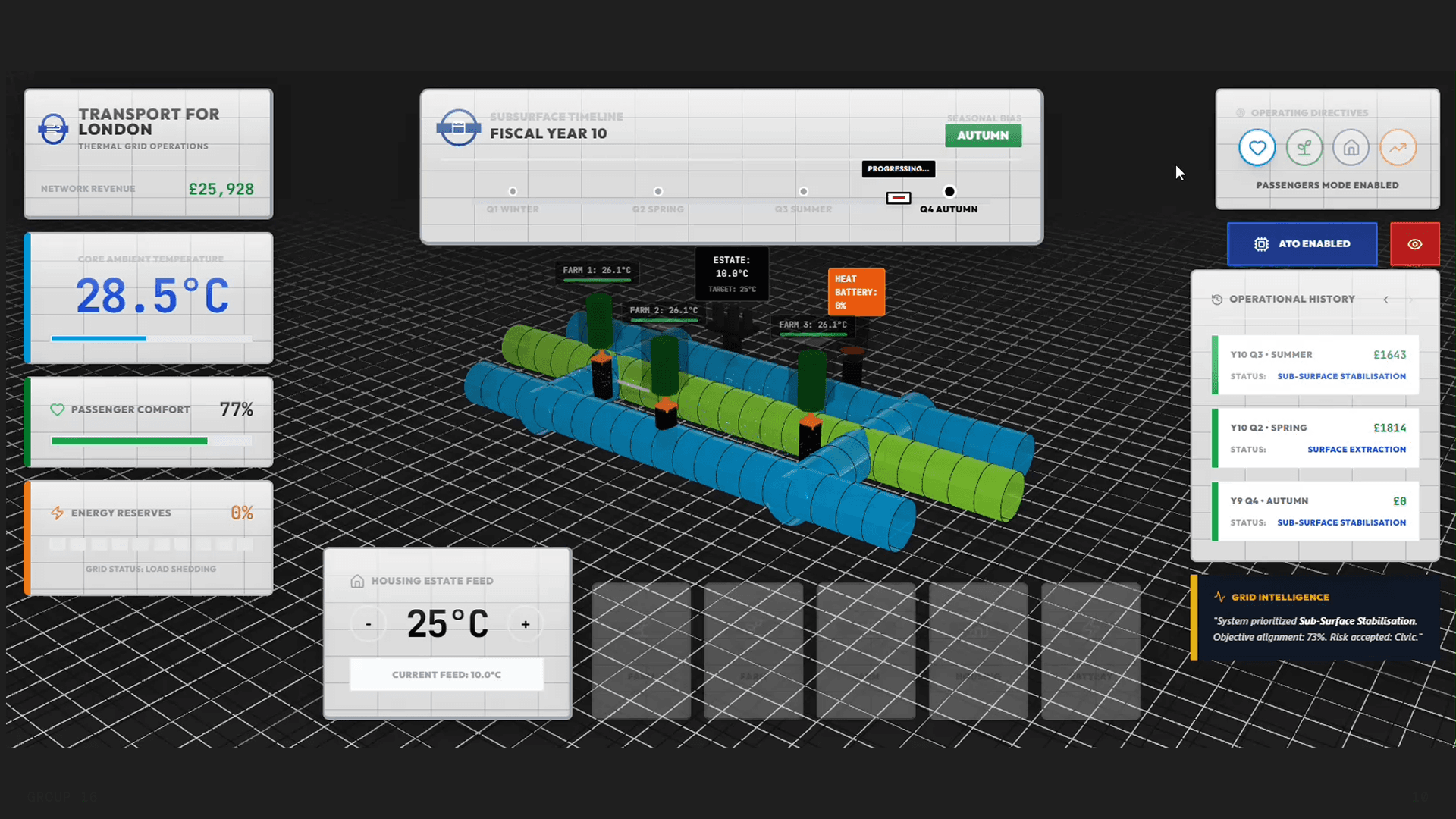
London’s Underground produces waste heat; we reframed that trapped heat as an untapped civic resource, not simply an operational liability. Our team developed Thermal Arteries, a speculative service that makes cross-organisational governance, operational responsibilities and the potential public value of heat redistribution visible.
- Role
- Service Designer & Systems Researcher
- Team
- Five-person RCA team
- Timeline
- January–February 2026 · Two months
- Outcome
- Heat-redistribution service, governance model and operator dashboard
My contribution
I helped establish the project’s system logic: reframing Underground heat as a shared resource, clarifying how responsibility should be distributed, and translating these relationships into an operator-facing service proposal.
- Reframed the challenge
Connected early heat research with lessons from rejected passenger-facing concepts, shifting the project from individual heat relief towards shared-resource redistribution.
- Structured governance
Led stakeholder mapping and governance analysis to separate who controls the system, who benefits, and who remains accountable across the service lifecycle.
- Translated system logic
Helped turn these relationships and trade-offs into the final service narrative and operator-facing dashboard, while defining the proposal’s validation boundaries.
The systemic challenge
London Underground was once advertised as a cool refuge.London Transport MuseumPoster; It is cooler below, by Frederick Charles HerrickConfirms the 1926 Underground poster promoted the Tube as a cool and comfortable way to travel in hot weather. A century later, clay tunnels store heat from trains, friction, ventilation, and dense use. In the project scenario, that trapped heat becomes a public health, passenger experience, and infrastructure resilience issue.

The project connected two urban needs: reducing heat pressure across the Underground and redirecting recoverable waste heat towards nearby civic uses.
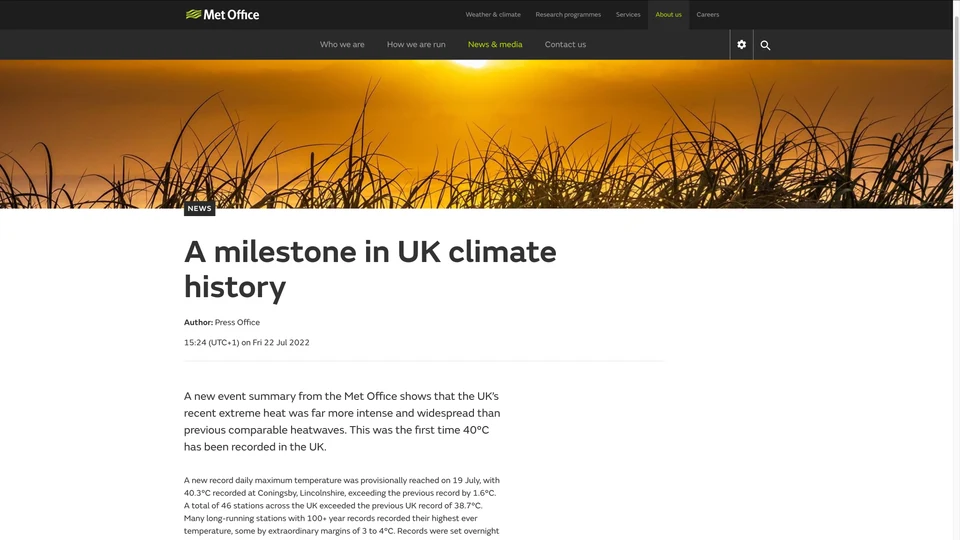
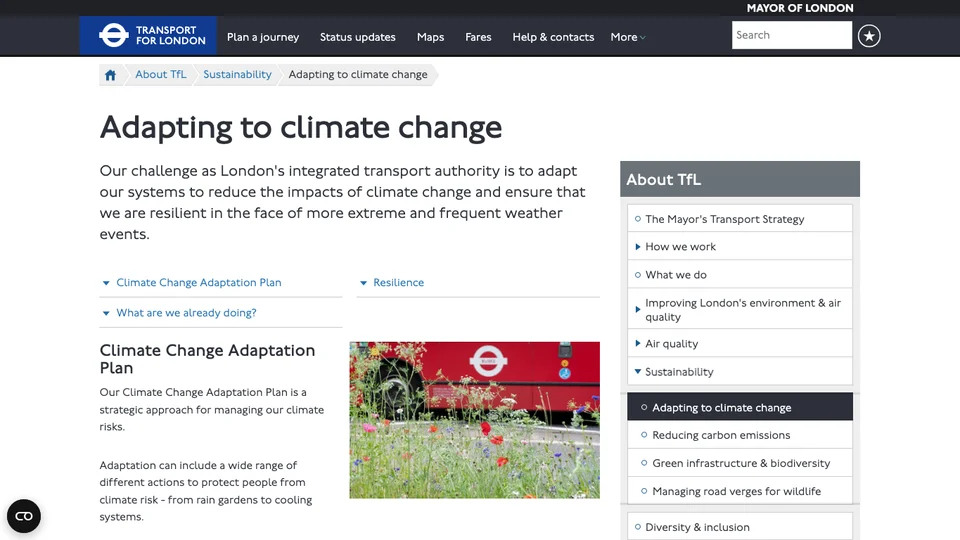
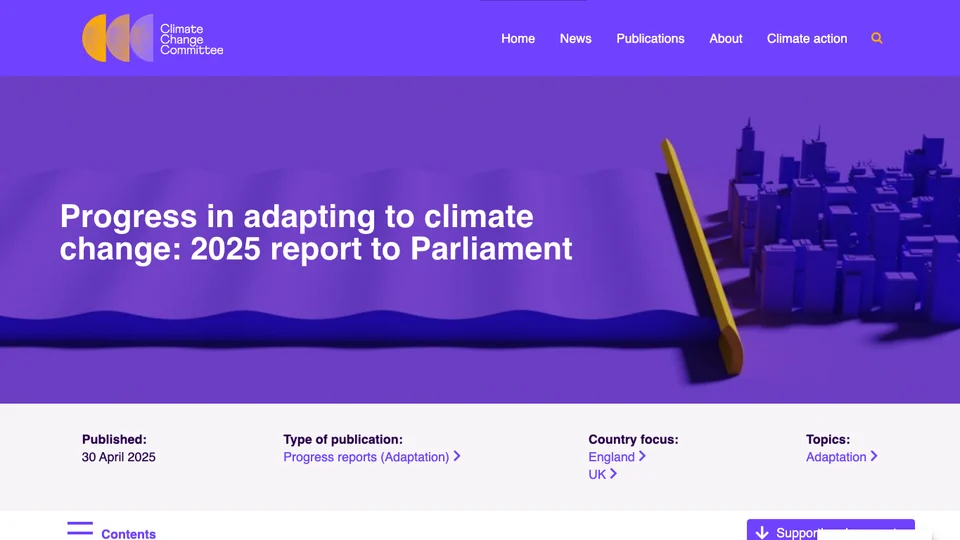
The UK recorded temperatures above 40°C for the first time in 2022.Met OfficeA milestone in UK climate historyAdds scale: 40.3°C at Coningsby, with 46 UK stations exceeding the previous national record. TfL reported that July 2022 heat caused closures, delays, speed restrictions, illness among customers and staff, and an estimated £8m revenue loss.Transport for LondonAdapting to climate changeFrames heat as a resilience and business-continuity risk across London transport operations. Without further adaptation, UK heat-related deaths could exceed 10,000 annually by 2050.Climate Change CommitteeProgress in adapting to climate change: 2025 report to ParliamentAdds policy context: UK adaptation delivery is assessed as inadequate, with no outcome scored as good. The design question became: who could responsibly turn waste heat into shared urban value?

How might we transform excess Underground heat from an operational challenge into a valuable urban energy resource that improves passenger comfort & supports London’s low-carbon future?
Why this mattered
- 01 Passenger risk
Heat creates discomfort and potential safety risks in a constrained public transport environment.
- 02 Operational exposure
Extreme heat affects public confidence and revenue for transport providers.
- 03 Urban resilience
Sub-surface heat also interacts with the wider urban heat island problem above ground.
Three decisions
Decision 01 — stop designing individual cooling products
- Initial direction
- A textile cooling object could relieve passengers in overheated spaces.
- What the prototype revealed
- The ice-pack experiment made passenger discomfort tangible, but only relieved an individual; it did not address heat accumulation across the system.
- Decision
- We shifted from personal cooling to system-level heat redistribution, positioning passengers as beneficiaries rather than infrastructure operators.
Decision 02 — reject unsupported energy conversion
- Initial direction
- Ambient noise might be converted into useful energy.
- What the prototype revealed
- The concept worked as a critique tool, but did not have enough evidence to support a city-scale 2050 climate proposal within the project scope.
- Decision
- We stopped inventing a new conversion mechanism and turned toward existing heat-transfer and district-energy precedents.
Decision 03 — design governance before interface
We initially assumed a dashboard could coordinate heat redistribution. Stakeholder mapping showed that data, infrastructure, policy, benefit and risk were controlled by different actors, so I defined the governance model before translating it into an operational interface.
- Evidence
Different stakeholders own data, policy, infrastructure, buildings, public health outcomes, and passenger experience.
- Interpretation
The people receiving value are not always the people paying for, operating, or being accountable for the system.
- Result
The final concept became a governed heat redistribution service, with an operational dashboard and lightweight passenger-facing communication.
Evidence chain
Each system response traces back to project evidence or an explicitly marked assumption.
| Research input | Design implication | System response |
|---|---|---|
| Precedent — Bunhill and heat-network schemes | Do not invent a new conversion model | Connect Underground heat to potential receiving nodes |
| Stakeholder insight — separated control and benefit | Governance must precede interface | TfL / civic operational model |
| Project principle — passengers should not operate infrastructure | Keep public interaction lightweight | Heat-map communication and welfare layer |
| Benchmark — operational ventilation optimisation | Operators need visibility and intervention | Thermal Arteries dashboard |
Benchmarks used as partial evidence
- Madrid’s metro
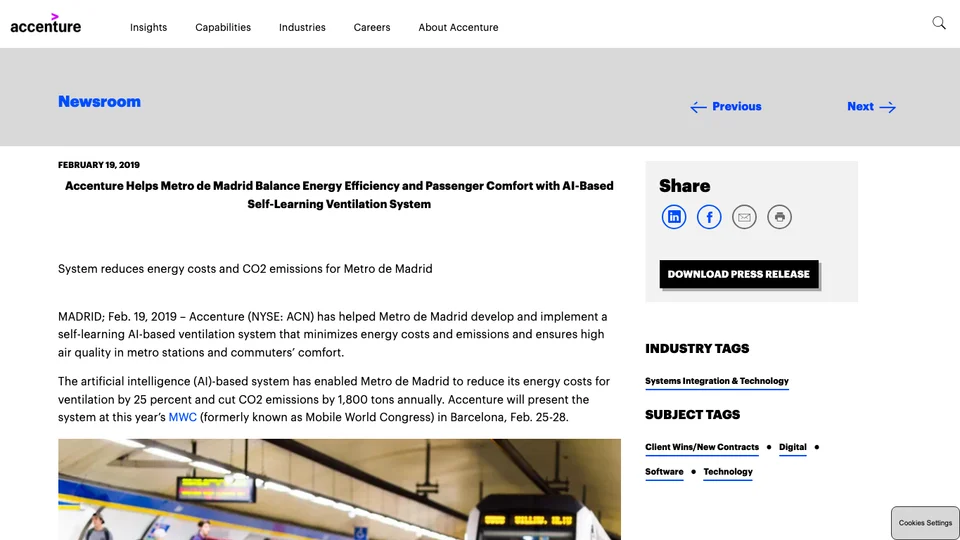
An AI-based self-learning ventilation precedent; useful as evidence for data-driven operational optimisation, not proof of heat redistribution.Accenture / Metro de MadridAI-based self-learning ventilation systemAdds scale: 891 fans, 80 GWh annual ventilation use, 25% cost reduction and 1,800 tons CO2 cut annually.
- CaixaForum living wall
A precedent for vertical greening in dense cities, supporting the ecological interface but not validating heat redistribution performance.Patrick BlancCaixa Forum vertical garden, MadridConfirms the living wall as a long-running Patrick Blanc project completed in 2007.
- Jungle Vertical Farm, Paris
Concept assumption: a commercial urban agriculture precedent, used to imagine vertical farms as potential heat-receiving nodes. Technical fit was not validated.SiftedJungle says it's cracked how to make vertical farms profitableAdds scale: a 5,500m2 farm 80km from Paris using stacked growing platforms.


Governance and value exchange
I led the stakeholder mapping and governance analysis behind this framing. The key move was separating decision-makers, system partners, and beneficiaries so the team could see where authority, value, risk, and accountability diverged.
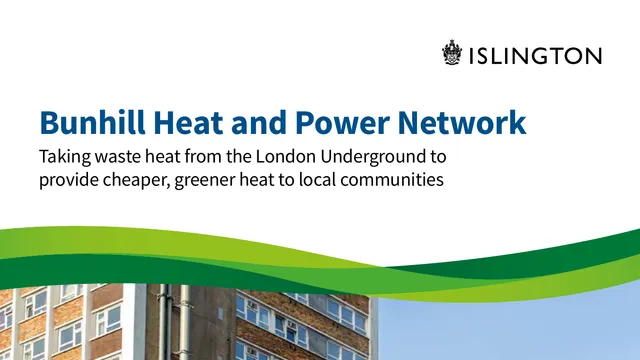
A confirmed precedent showed that Underground waste heat can feed district heating.Islington CouncilBunhill Heat and Power Network brochureShows Underground waste heat already being connected to local homes, schools and leisure buildings. In this proposal, TfL is treated as an infrastructure partner in a governed heat-recovery network, not as a confirmed thermal utility provider.
Governed infrastructure, not a consumer product
Urban Heat Redistribution System
TfL
Data owner & system operator
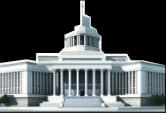
City Authority
Governance & policy alignment
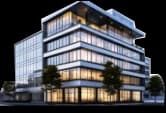
Infrastructure Operators
Ventilation, energy networks
Adjacent Programmes
Vertical farms, public facilities

Commuters
Experience reduced thermal stress
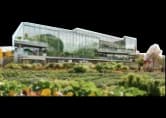
Wider Urban Environment
Reduced waste heat & improved urban resilience
Decision and Control
Actors who hold decision-making power and define system priorities.
System Partners
Actors who enable the system to operate, without owning governance or strategy.
Beneficiaries
Actors who benefit from the system without needing to participate or take action.
From model to service
A high-level model showing how the service could move from outreach to technical planning, implementation, operation, and feedback. It is a lifecycle, not a fully validated service blueprint.
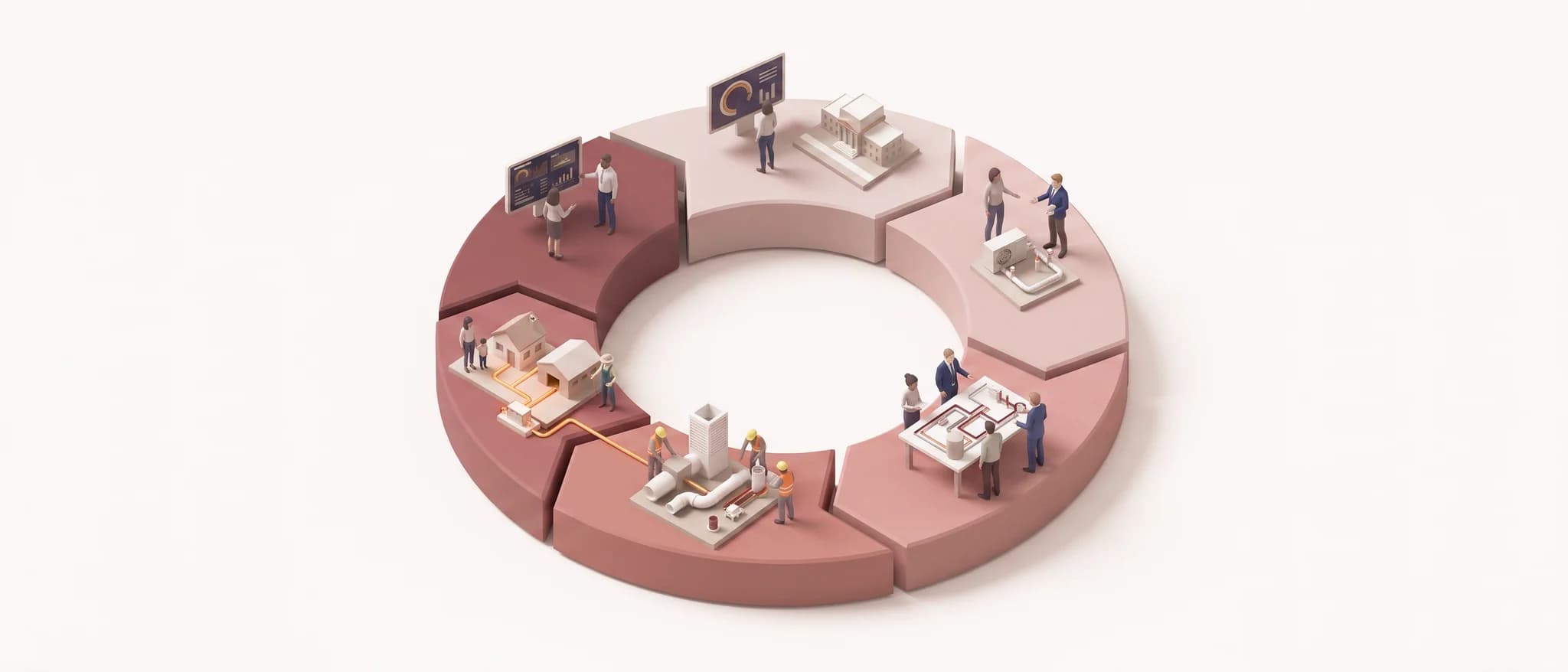
Service lifecycle
- 06FeedbackCustomers provide performance data; TfL monitors impact.
- 05Use / BenefitHeat supports residential or agricultural use; passenger comfort improves.
- 04ImplementationTfL installs infrastructure; buildings connect to the heat network.
- 01Discover / AwarenessCustomers learn about TfL heat-recovery opportunities via business outreach.
- 02Engage / InquiryCustomers request energy solutions and get technical consultations.
- 03Plan / DesignTfL collaborates with building and urban planners on heat-piping, storage, and distribution solutions.
Thermal Arteries prototype
Thermal Arteries is a concept prototype for an operator managing temperature, passenger comfort, demand, revenue implications, and receiving-node capacity. The "Grid Intelligence" readout is speculative decision support, not a validated AI system.
What the dashboard needs to make clear
- Data inputs
Temperature, comfort signals, seasonal demand, receiving-node capacity, and constraints.
- Human oversight
Operators need to understand recommendations, intervene, and escalate exceptions.
- Decision boundary
Engineering feasibility, rule logic, and automation authority remain unvalidated.
Passenger communication layer
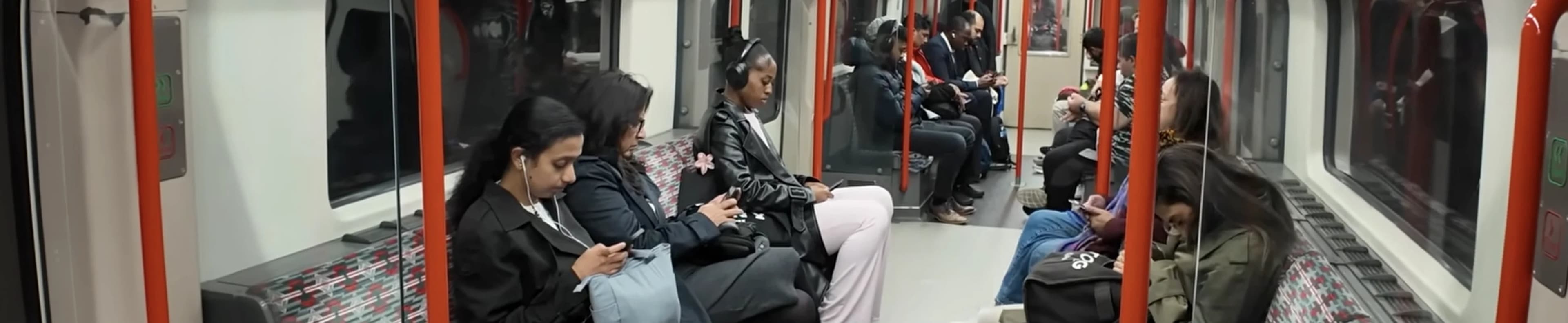
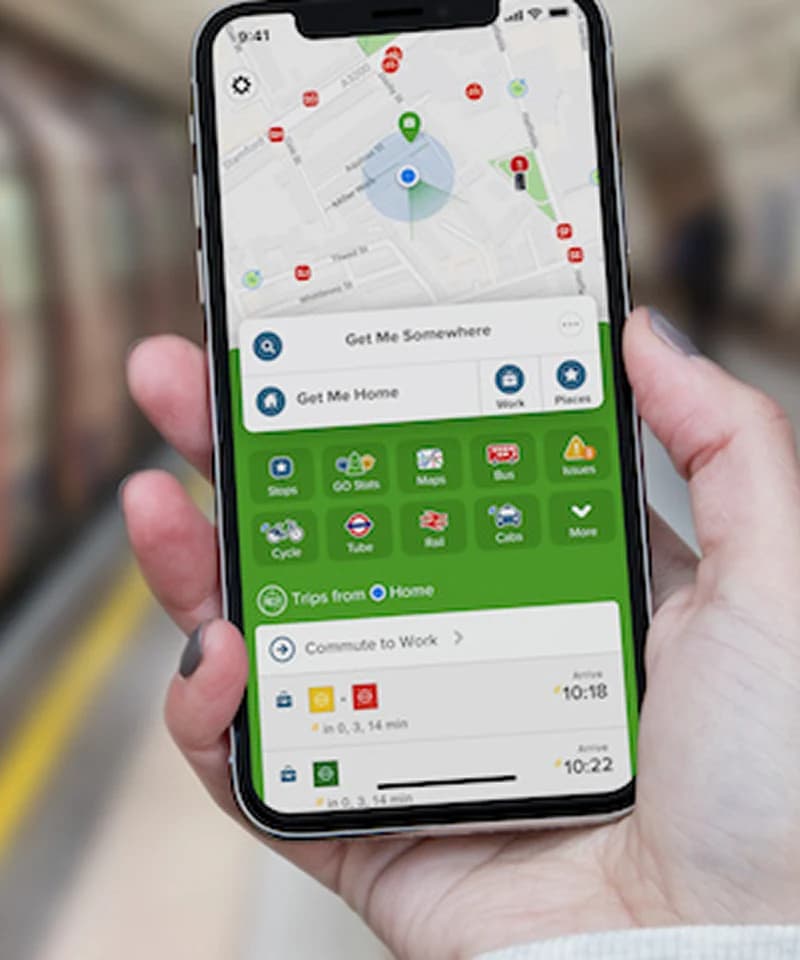
The passenger-facing layer explored how heat status could appear through familiar TfL touchpoints: a lightweight map cue, line-colour language, and simple guidance rather than a new system passengers had to operate.
TfL app integration concept: thermal status becomes a lightweight map cue, not a separate passenger-operated system.
Experience and ecology
The proposal explores two connected outcomes: ecological heat-reuse pathways and improved passenger thermal experience. The following scenarios distinguish proposed mechanisms from validated performance.
- 01Plant-based cooling
Evapotranspiration may support local temperature and humidity regulation.
- 02Thermal buffering
Vegetated infrastructure may slow heat transfer to passenger areas.
- 03Heat-to-growing loop
Recovered heat and plant waste may support controlled cultivation.
- 04Passenger awareness
Visible ecological systems may communicate seasonal growth and heat reuse.
Validation and limitations
The proposal is strongest as a concept-level service and governance model. It is evidence-informed, but it is not an engineered or piloted system.
- 01Validated in project scope
The team tested and critiqued early concept directions, used precedents to ground feasibility, and produced a coherent system narrative and prototype for final RCA submission.
- 02Evidence-backed assumptions
Heat networks, ventilation optimisation, living walls, and vertical farming exist as precedents, but each supports only part of the proposed system.
- 03Speculative proposal
Thermal Arteries combines these elements into a 2050 civic infrastructure scenario, including decision-support logic and passenger communication.
- 04Not yet validated
Thermal performance, commercial viability, institutional ownership, dashboard usability, failure handling, and stakeholder adoption all require further work.
Next validation steps
- Engineering feasibility
Model heat capture, storage, transfer capacity, tunnel constraints, and receiving-node demand.
- Stakeholder incentives
Test governance ownership, procurement pathways, funding logic, risk allocation, and delivery partners.
- Operational usability
Prototype dashboard decisions, alerts, overrides, escalation paths, and passenger welfare communications.
Reflection
The most important shift I made was moving from designing objects for overheated passengers to designing the governance conditions around a shared urban resource.
The project also shifted my focus from a radical future service to a more mundane one: infrastructure that could support ordinary comfort under increasingly extreme conditions.
What worked was the reframing: failed prototypes and stakeholder mapping gave the team a clearer constraint: use existing infrastructure where possible, and put most of the work into how the system is run and governed. What remains unproven is whether the proposed network can be engineered, funded, governed, and adopted at the scale imagined.
If I continued the project, I would narrow the proposition before expanding it: choose one service path, test it with a specific owner or delivery partner, and validate the dashboard as an operational decision tool rather than a polished interface alone.
References
Numbered references are included only for external factual claims and precedents. Project assumptions and speculative elements are labelled in the relevant sections rather than cited as validated facts.
- ^ "Poster; It is cooler below, by Frederick Charles Herrick". London Transport Museum. 1926.
- ^ "A milestone in UK climate history". Met Office. 2022.
- ^ "Adapting to climate change". Transport for London. 2024.
- ^ "Progress in adapting to climate change: 2025 report to Parliament". Climate Change Committee. 2025.
- ^ "AI-based self-learning ventilation system". Accenture / Metro de Madrid. 2019.
- ^ "Caixa Forum vertical garden, Madrid". Patrick Blanc. 2008.
- ^ "Jungle says it's cracked how to make vertical farms profitable". Sifted. 2021.
- ^ "Bunhill Heat and Power Network brochure". Islington Council. 2021.
- ^ "Heat resilience and sustainable cooling". UK Parliament Environmental Audit Committee. 2024.